
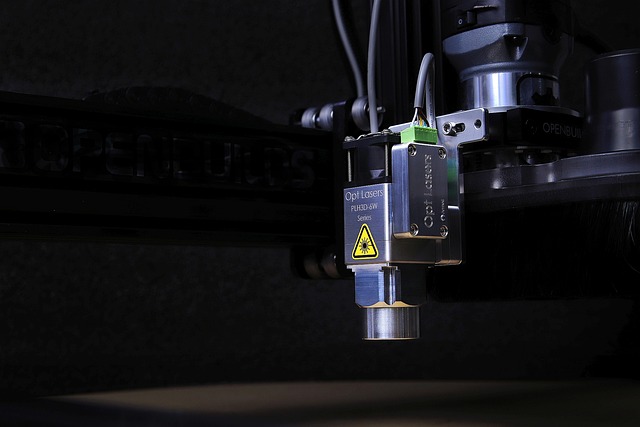
How Laser Welding Machine Technology Redefines Welding Machine Efficiency in 2025
The Evolution of Welding Technology Toward 2025
The welding industry is entering a new era defined by automation, data-driven control, and high-efficiency systems. As industries from automotive to aerospace demand cleaner, faster, and more precise joining methods, the welding machine landscape is transforming rapidly. By 2025, these changes are not just technological—they are strategic shifts reshaping global manufacturing competitiveness.
Shifts in Industrial Welding Demands
Industrial welding has always been about strength and reliability, but the modern shift focuses on precision and speed. Manufacturers now demand welds that meet microscopic tolerances while maintaining throughput. This has pushed a transition from traditional arc welding toward automated systems that can perform repetitive tasks with minimal error. The adoption of digital control systems allows for parameter consistency across large production runs.
Additionally, the integration of advanced materials like titanium alloys and carbon composites requires specialized joining techniques. These materials are essential in sectors such as aerospace and electric vehicles, where weight reduction and structural integrity are critical. To handle them effectively, new welding machines must deliver controlled heat input without compromising mechanical properties.
The Role of Automation and Digital Control Systems
Automation in welding isn’t just about replacing manual labor—it’s about enhancing repeatability and quality assurance. Robotic arms paired with CNC controllers now execute complex weld paths with millimeter-level accuracy. Real-time monitoring through sensors detects deviations in temperature or penetration depth instantly, allowing operators to adjust parameters before defects occur.
Adaptive control algorithms take this further by learning from previous welds. They dynamically modify power levels or beam focus based on material feedback, ensuring consistent quality even when environmental conditions fluctuate. This combination of robotics and AI-driven control defines the next generation of industrial efficiency.
Laser Welding Machine: The Core of Modern Efficiency
Laser welding machines have become central to modern fabrication because they combine precision with speed in ways conventional methods cannot match. Their non-contact nature eliminates tool wear, making them ideal for high-volume operations where downtime is costly.
Principles Behind Laser Welding Technology
Laser welding works by focusing a high-energy beam onto a small area, creating localized melting and fusion. The concentrated energy density enables deep penetration with minimal distortion—a key advantage when working on thin or delicate materials. Because it’s a non-contact process, contamination risks are reduced significantly compared to electrode-based systems.
This technology is compatible with diverse materials including stainless steel, aluminum alloys, nickel-based superalloys, and even composites used in aerospace structures. Such versatility makes the laser welding machine indispensable across industries seeking both performance and flexibility.
Key Efficiency Metrics in Laser Welding Machines
Efficiency in laser welding is measured not just by power consumption but also by material utilization and output quality. Compared to traditional arc systems, energy transfer efficiency is markedly higher since most of the laser energy goes directly into melting rather than heating surrounding areas.
The minimized heat-affected zone (HAZ) improves joint integrity and reduces residual stress—factors that directly influence fatigue life in components like turbine blades or battery casings. Enhanced precision also means less post-processing; parts often come out of the machine ready for assembly without grinding or polishing.
Technological Advancements Driving Laser Welding Performance in 2025
By 2025, several advancements are shaping how laser welding machines perform under demanding conditions. These include improvements in fiber laser design, smarter sensing technologies, and AI-based process optimization tools that make each weld more predictable.
High-Power Fiber Lasers and Beam Quality Improvements
Fiber lasers have evolved into kilowatt-class systems capable of cutting through thicker materials while maintaining tight focus control. Improved beam shaping techniques distribute energy evenly along the seam, preventing hot spots that cause spatter or porosity.
Enhanced focus adjustment mechanisms allow operators to maintain optimal penetration depth even when part thickness varies slightly—an essential feature for mass production lines where consistency defines profitability.
Smart Sensors and AI-Based Process Optimization
Modern laser welding machines now integrate optical sensors that analyze the weld pool in real time. These sensors detect fluctuations in brightness or shape that indicate potential defects such as undercuts or blowholes.
AI algorithms process this data instantly to predict optimal parameters—adjusting power output or feed rate automatically. Closed-loop feedback ensures uniform quality across entire production batches without manual intervention. This level of automation minimizes waste while maximizing throughput efficiency.
Comparing Laser Welding Machines with Conventional Welding Systems
The debate between conventional arc systems and laser-based solutions often centers on cost versus capability. However, productivity metrics increasingly favor lasers due to their unmatched speed and accuracy across multiple applications.
Productivity Gains Across Different Applications
Laser systems achieve faster travel speeds than MIG or TIG processes—sometimes five times faster depending on material type—significantly reducing cycle times in automotive body assembly or aircraft component fabrication. Multi-axis laser heads can reach complex geometries without repositioning parts manually, which shortens setup time dramatically.
Because there’s no consumable electrode or filler wire replacement required, downtime decreases substantially over long production runs—a major advantage for continuous manufacturing environments.
Quality and Cost Considerations in Industrial Implementation
Laser-welded joints typically exhibit superior surface finish compared to arc-welded ones, minimizing secondary machining operations like grinding or deburring. While initial investment costs may appear high due to equipment complexity, operational savings quickly offset them through reduced rework rates and lower maintenance expenses.
In automated production settings where scalability matters most, integrating multiple laser stations allows parallel processing without sacrificing precision—something difficult to achieve with manual or semi-automatic arc setups.
Future Trends Shaping the Next Generation of Laser Welding Machines
As industries push toward sustainability and smarter manufacturing ecosystems, future developments will combine hybrid processes, energy-efficient designs, and digital twins for predictive maintenance—all aimed at maximizing uptime while reducing environmental impact.
Hybrid Welding Processes Combining Laser with Arc Techniques
Hybrid laser-arc welding merges deep penetration from lasers with gap-bridging ability from arcs. This synergy improves joint tolerance handling while enabling thicker section joining at higher speeds. It’s particularly useful for shipbuilding or heavy machinery sectors where component fit-up variations are common.
Such hybridization also enhances adaptability across different alloys without extensive parameter reconfiguration—a clear productivity advantage for multi-material assemblies.
Sustainability and Energy Efficiency Innovations
Energy efficiency remains a top priority heading into 2025. Advanced modulation techniques reduce power draw during idle phases without compromising output stability. Since many laser processes eliminate filler materials entirely, emissions drop significantly compared to flux-based methods—aligning well with global sustainability goals set by manufacturing leaders like Siemens Energy (source: Siemens Annual Report 2023).
Environmentally friendly operations aren’t just regulatory compliance—they’re becoming key brand differentiators across supply chains emphasizing green credentials.
Digital Twin Integration for Predictive Maintenance and Process Simulation
Digital twins replicate physical welding machines virtually to simulate different process conditions before actual production begins. Engineers can fine-tune parameters digitally to avoid trial-and-error waste on real components.
Predictive analytics within these models identify early signs of component wear—such as lens contamination or cooling inefficiencies—allowing maintenance teams to act proactively rather than reactively. This approach extends machine lifespan while keeping uptime consistently high.
Strategic Implications for the Welding Industry in 2025 and Beyond
The rise of intelligent automation doesn’t eliminate human expertise—it transforms it. Technicians now need advanced training focused on interpreting sensor data rather than manually controlling torches.
Workforce Transformation Through Advanced Training Needs
Operators must develop skills in system calibration, software interface management, and AI-assisted diagnostics. Vocational programs worldwide are already updating curricula accordingly—for example, Germany’s Fraunhofer Institute launched a “Smart Welding Technician” certification program emphasizing digital literacy alongside metallurgical fundamentals (Fraunhofer IWU Report 2024).
This evolution creates opportunities for skilled professionals who can bridge mechanical craftsmanship with computational insight—a valuable combination as factories become more autonomous.
Global Competitiveness Driven by Technological Adoption Rates
Countries adopting advanced laser technologies early gain measurable advantages in throughput efficiency and export competitiveness. Collaborative ecosystems among manufacturers, universities, and software developers accelerate innovation cycles—mirroring what’s happening in Japan’s National Manufacturing Platform Initiative (NMPi), which links over 200 companies sharing real-time process data securely via cloud infrastructure (NMPi White Paper 2023).
Those lagging behind risk losing market share as customers prioritize suppliers capable of delivering consistent quality at lower operational costs through automation-driven workflows.
FAQ
Q1: What makes a laser welding machine more efficient than traditional arc systems?
A: Its focused energy delivery minimizes heat loss while achieving deeper penetration at higher speeds; this results in less distortion and fewer post-processing steps required after welding.
Q2: Are fiber lasers suitable for all types of metals?
A: They work effectively on most metals including stainless steel, aluminum alloys, titanium, copper alloys; however reflective surfaces may require specific wavelength adjustments or coatings for stable operation.
Q3: How do smart sensors improve weld quality?
A: Sensors continuously monitor weld pool characteristics such as brightness patterns; if deviations occur they trigger automatic corrections via closed-loop control maintaining uniform quality throughout production runs.
Q4: What industries benefit most from hybrid laser-arc processes?
A: Sectors dealing with thick sections like shipbuilding heavy equipment railcar manufacturing see major gains because hybrid methods combine penetration depth from lasers with filler flexibility from arcs improving gap tolerance dramatically.
Q5: Why is digital twin integration important for future welding operations?
A: It allows simulation-based parameter tuning before actual runs reducing scrap rates; predictive analytics within digital twins also forecast component wear enabling timely maintenance actions preventing unexpected downtime.