
Is Laser Welding Machine Technology Redefining the Future of Welding
The Evolution of Welding Technologies
As manufacturing keeps pushing for tighter tolerances and faster production, welding has evolved from a purely manual craft to a highly automated science. Traditional methods like MIG, TIG, and arc welding have laid the foundation for what came next. Yet, the rise of laser welding machines has redefined what precision joining can achieve. For engineers and production managers alike, the question now is not whether laser welding works—it’s whether it represents the future of all welding.
From Traditional Welding to Advanced Techniques
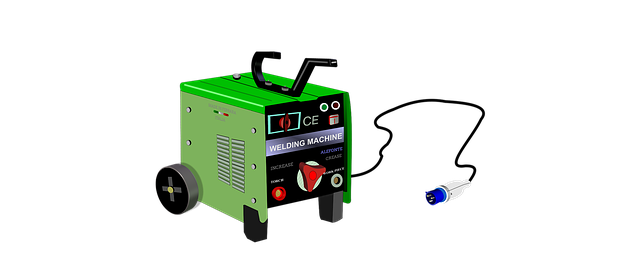
Conventional welding methods such as metal inert gas (MIG), tungsten inert gas (TIG), and shielded metal arc welding have been industrial mainstays for decades. These techniques rely on electric arcs to generate heat that melts filler material and base metals, forming strong joints once cooled. Despite their reliability, they face limitations in speed, precision, and compatibility with lightweight or heat-sensitive materials. When working with thin stainless steel or aluminum alloys, excessive heat input often leads to warping or microcracks that compromise integrity.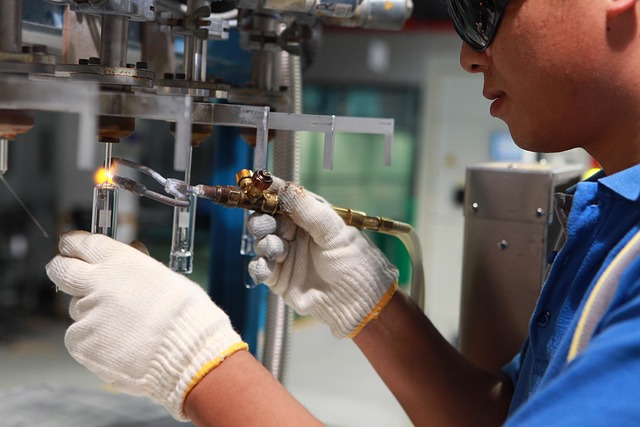
The industrial shift toward automation was driven by demand for higher throughput and repeatability. Robotic arms equipped with sensors began replacing manual welders on assembly lines. This transition set the stage for more advanced joining processes—especially those capable of micro-scale accuracy without sacrificing strength.
Emergence of Laser Welding Technology
Laser welding technology emerged from research into high-energy light sources during the mid-20th century. Early CO₂ lasers demonstrated the potential for concentrated energy delivery, but it was the development of fiber lasers in the 1990s that transformed industrial adoption. Fiber systems offered higher beam quality, lower maintenance needs, and better energy efficiency than earlier designs.
Today, laser welding machines are integrated directly into automated production cells across industries—from automotive to aerospace—allowing continuous operation with minimal human intervention. Compared to traditional fusion techniques, laser systems provide superior control over penetration depth and heat distribution while consuming less power per weld joint. The result is faster cycle times and cleaner weld seams that require little or no post-processing.
Core Principles of Laser Welding Machine Technology
The success of any laser welding machine depends on how effectively it converts light energy into thermal energy at the joint interface. Unlike arc-based systems that spread heat over a wide area, laser systems focus energy into a microscopic spot—creating deep, narrow welds with minimal distortion.
Understanding the Laser Welding Process
The process begins when a focused laser beam strikes the workpiece surface. The beam’s power density determines whether it produces surface melting (conduction mode) or deep keyhole penetration (fusion mode). Key parameters such as beam quality, focal position, and pulse duration influence how efficiently material fusion occurs. Fiber lasers typically deliver higher brightness and stability than CO₂ or disk sources, making them suitable for high-speed precision tasks like battery tab joining or medical device assembly.
In practice, controlling these variables allows you to tailor weld geometry precisely—something nearly impossible with conventional arc methods where heat spreads unpredictably through conduction.
Components and System Architecture of Laser Welding Machines
A standard laser welding machine consists of four essential components: the laser source itself; optical elements that shape and guide the beam; motion systems that position workpieces; and a digital control unit managing synchronization between all parts. Beam delivery systems—often using fiber optics—play a critical role in maintaining consistent focus even when robots move dynamically across complex geometries.
Modern setups frequently integrate robotic automation to handle multi-axis movement or repetitive tasks. This flexibility makes it possible to switch between product types quickly without retooling entire production lines.
Technological Advantages Driving Adoption
Laser-based joining isn’t just about speed—it’s about control at every level of production quality.
Precision and Control in Material Joining
Laser welding achieves extremely narrow seams with minimal heat-affected zones. That precision prevents deformation even in delicate assemblies like pacemaker housings or smartphone casings. Because you can adjust beam intensity in real time, joining dissimilar materials such as copper-to-aluminum becomes feasible without brittle intermetallic formation—a significant advantage over TIG or MIG approaches.
Productivity and Efficiency Gains in Manufacturing
High-power fiber lasers routinely reach travel speeds exceeding 10 meters per minute on thin sheet metals. That translates directly into shorter cycle times for mass production lines assembling automotive body panels or EV battery enclosures. Clean welds also reduce grinding or polishing afterward—saving both labor hours and consumables. Moreover, since lasers convert electrical power into usable thermal energy more efficiently than arcs do, total energy consumption per joint drops substantially over time.
Quality Assurance Through Automation and Monitoring
Automation doesn’t stop at motion control; modern machines use embedded sensors to monitor temperature profiles and melt pool dynamics continuously. AI-driven feedback loops analyze this data to adjust parameters on-the-fly if anomalies appear—preventing defects before they occur. Many facilities also integrate non-destructive testing methods such as optical coherence tomography directly into their welding heads for instant verification of penetration depth or porosity levels.
Industrial Applications Transforming Manufacturing Sectors
Laser welding machines have found their way into nearly every high-performance industry where durability meets design complexity.
Automotive Industry Innovations
Electric vehicle manufacturers rely heavily on laser systems for sealing battery housings because these joints must remain leak-proof under vibration stress while minimizing added weight. Aluminum alloy structures benefit from low-heat input joining that maintains tensile strength across seams—critical when meeting crash safety standards without increasing mass.
Aerospace and Defense Implementations
In aerospace fabrication, weight reduction is everything. Laser welding enables precise joining of titanium or nickel-based superalloys used in turbine blades or fuselage frames while avoiding distortion common in arc processes. Automated inspection ensures compliance with stringent aerospace-grade certifications like AS9100 through built-in imaging analysis modules.
Electronics, Medical, and Energy Sectors Adoption
Miniaturization trends in electronics demand micro-welding capabilities achievable only through tightly focused beams. In medical manufacturing, hermetic sealing is vital for implantable devices exposed to bodily fluids; lasers deliver these seals consistently without contaminating sensitive components. Renewable energy sectors also employ them for solar cell tabbing or fuel cell stack assembly due to their ability to create fine conductive paths without damaging adjacent layers.
Challenges Limiting Widespread Implementation
Despite clear advantages, several barriers still hinder universal deployment across smaller workshops or cost-sensitive industries.
Technical Barriers to Broader Integration
Laser processes are highly sensitive to joint preparation accuracy—any gap misalignment can cause incomplete fusion or spatter ejection. Parameter optimization varies widely depending on alloy composition and thickness; achieving perfect results demands experienced technicians familiar with optical alignment principles rather than traditional torch handling skills.
Economic Considerations for Industrial Scaling
Initial acquisition costs remain substantial because high-power lasers require specialized cooling units and precise optics maintenance schedules. Over time though, lower consumable use offsets some expenses—but small enterprises often struggle with upfront investment justification compared against established arc setups already depreciated on their books.
Future Directions in Laser Welding Machine Development
Research continues rapidly toward smarter systems capable of self-adjustment during operation based on sensor feedback loops tied into digital twins of manufacturing cells.
Advancements in Beam Control and Hybrid Processes
Adaptive optics now allow real-time modification of beam shape—from circular spots to elongated ellipses—to balance penetration depth versus width depending on material response. Hybrid configurations combining laser beams with arc plasma enhance filler deposition rates while maintaining fine edge definition—a practical solution for thick structural joints demanding both strength and aesthetics.
Digitalization, AI Integration, and Smart Manufacturing Trends
AI algorithms trained on historical process data can predict optimal settings before each run begins—reducing setup time dramatically across varied product batches. When connected via IoT frameworks within Industry 4.0 environments, these machines transmit performance metrics to cloud dashboards enabling remote supervision across global facilities simultaneously.
Sustainability Implications in Modern Manufacturing
Energy efficiency remains one of the strongest sustainability arguments favoring laser adoption: each weld consumes less electricity than equivalent arc operations while producing fewer emissions from shielding gases or electrode waste streams. Furthermore, precise thermal control supports easier disassembly during recycling phases—aligning perfectly with circular economy initiatives gaining traction worldwide.
FAQ
Q1: What makes a laser welding machine different from MIG or TIG equipment?
A: It uses concentrated light instead of an electric arc to melt material locally, producing narrower seams with less heat distortion compared to traditional methods.
Q2: Can lasers join dissimilar metals effectively?
A: Yes, by adjusting power density and pulse duration precisely you can bond combinations like copper-aluminum without forming brittle compounds common in conventional fusion techniques.
Q3: Are fiber lasers better than CO₂ types?
A: Generally yes—they deliver higher beam quality at lower maintenance cost while being more compact for integration into automated systems.
Q4: Why isn’t every factory switching immediately?
A: High initial costs plus operator training requirements slow adoption despite long-term efficiency benefits already proven in large-scale operations.
Q5: How does AI improve modern laser welding performance?
A: Machine learning models analyze sensor data during operation to tweak parameters automatically ensuring consistent quality even when materials vary slightly batch-to-batch.