
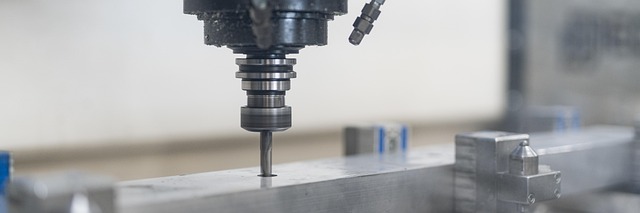
Is Haas TM1 The Ideal Choice For Your First Big CNC Project In Bronze
First Big CNC Project! Made on the Haas TM1 in Bronze
Bronze machining demands a balance between precision and machine stability. The Haas TM1, a well-regarded toolroom mill, fits this requirement by offering professional-grade accuracy at an accessible price point. For machinists planning their first large CNC project in bronze, the TM1 provides a strong mix of rigidity, control simplicity, and adaptability. It’s not the most powerful Haas model, but it delivers consistent results for non-ferrous applications where surface finish and repeatability matter most.
Understanding the Haas TM1 and Its Place in CNC Machining?
The Haas TM1 occupies a unique position among compact mills. It’s often chosen for training labs, prototype work, and small-scale production due to its reliability and user-friendly interface.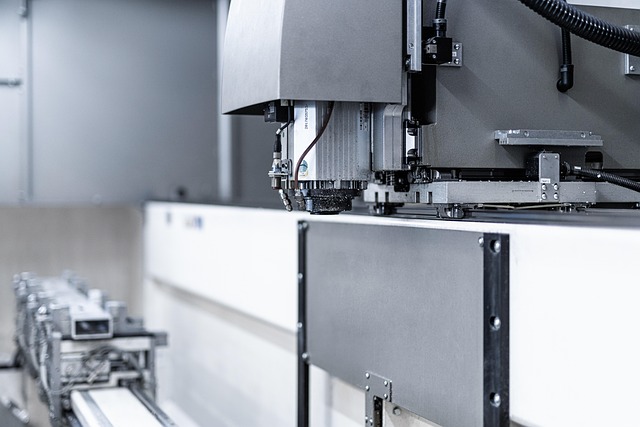
Overview of the Haas TM1 Model
The TM1 is designed for flexibility in toolroom environments. It combines affordability with industrial-level performance, making it suitable for both entry-level machinists and experienced operators. Its open-frame design simplifies part loading and setup changes. Educational institutions frequently use the TM1 because its control system mirrors that of larger Haas models, easing the transition to production-scale machines.
Key Technical Specifications Relevant to Bronze Machining
The spindle speed of 4,000 rpm (in standard configuration) provides enough range for cutting bronze alloys efficiently. With 7.5 horsepower on tap, it maintains torque even at moderate speeds—important when machining denser bronze grades like C932 or C95400. The table measures roughly 47 inches by 10 inches with travel dimensions around 30 × 12 × 16 inches, accommodating mid-size components such as bushings or decorative castings. Its intuitive control interface integrates smoothly with CAM software like Fusion 360 or Mastercam, allowing precise toolpath generation without complex post-processing adjustments.
Evaluating the Haas TM1 for Bronze Machining Applications?
Machining bronze differs from aluminum or mild steel; it generates heat quickly and demands stable chip evacuation. The TM1’s mechanical structure helps manage these challenges effectively.
Material Considerations When Machining Bronze
Bronze’s toughness requires steady spindle performance to avoid chatter or tool deflection. Because bronze conducts heat efficiently but retains it near the cutting edge, coolant flow must be directed precisely at the tool–workpiece interface. Proper evacuation prevents recutting chips that could mar surface finish. Tool wear management is vital; uncoated carbide tools tend to dull faster on bronze due to embedded silica particles within certain alloys.
Performance of the TM1 with Non-Ferrous Metals
The TM1’s rigid frame contributes to consistent dimensional accuracy even during longer machining cycles. Variable spindle speeds allow adaptation across different bronze compositions—from softer bearing bronzes to high-strength aluminum-bronze blends. Adaptive feed control within modern Haas software improves tool life by adjusting feed rates automatically when load conditions vary during contouring or pocket milling.
Comparing Haas TM1 with Other Popular Haas Models?
Haas offers multiple models catering to different scales of production and material requirements. Comparing them clarifies where the TM1 fits best for bronze machining tasks.
Differences Between TM1, VF Series, and Mini Mill Models
The VF series delivers higher horsepower and torque outputs suited for heavy-duty materials such as stainless steel or titanium. Mini Mills are compact but sometimes lack rigidity when cutting dense metals like bronze under deep engagement conditions. The TM1 sits between these two extremes—it provides sufficient stiffness without overspending on capacity rarely needed in small workshops or prototype labs.
Factors Influencing Model Selection for Material-Specific Projects
Model selection should consider torque curves relative to cutting resistance of specific bronze alloys. A stiffer machine may be required if tolerance levels below ±0.001 inch are necessary across large surfaces. Compatibility between spindle taper (CAT40 on most TMs) and high-performance tooling systems also affects vibration damping during aggressive cuts.
Optimizing CNC Workflows Using Haas TM1 Features?
Beyond raw hardware specifications, workflow efficiency depends on how well operators exploit available control features and maintenance routines.
Leveraging Control Systems for Efficient Programming
Haas’ proprietary control supports conversational programming that allows direct G-code input through guided menus—ideal when adjusting feeds on-the-fly during test passes in bronze machining. Integration with CAM platforms enables sculpted geometries typical in artistic or aerospace bronze parts while maintaining consistent step-over accuracy across curved surfaces. Real-time monitoring displays spindle load graphs so machinists can adjust parameters before reaching critical thresholds.
Enhancing Accuracy Through Calibration and Maintenance Practices
Regular calibration keeps geometric alignment tight across X-Y-Z axes, particularly after extended use on heavy stock materials like phosphor bronze billets. Scheduled lubrication minimizes backlash in ball screws that might otherwise degrade finish quality over time. Updating firmware periodically enhances motion smoothness and refines interpolation algorithms critical for fine contouring work.
Practical Recommendations for a First Large CNC Project in Bronze Using TM1?
Executing a first major CNC project successfully involves preparation beyond programming—setup discipline often determines final quality more than raw machine capability.
Preparing the Machine Setup for Optimal Results
Carbide tools coated with TiAlN or diamond-like carbon resist wear during long runs on abrasive bronzes. Secure fixturing reduces vibration that can lead to micro-chatter marks along edges or bores. Coolant delivery should target both flutes of end mills evenly; mist systems may suffice for shallow passes but flood cooling is preferred for deeper cavities where chip accumulation risks re-cutting.
Process Optimization Strategies for Professional Results
Trial passes reveal optimal feed rates by observing chip color and shape—bright golden curls indicate correct cutting temperature while darkened chips suggest overheating. Step-down strategies limit deflection when machining deep pockets; removing material gradually preserves dimensional integrity without stressing cutters prematurely. Recording spindle load data during operations helps refine future setups by identifying efficient speed–feed combinations specific to each alloy batch.
Long-Term Value Assessment of Investing in a Haas TM1 for Bronze Workpieces?
For workshops balancing cost against precision output, evaluating long-term value matters more than initial purchase price alone.
Cost-to-Benefit Analysis in Professional Environments
While initial investment may seem moderate compared with full-size VF centers, productivity gains accumulate through reduced downtime and simplified maintenance schedules. The TM1’s reliable uptime translates into consistent throughput across multiple project cycles, while its reputation within precision manufacturing sustains high resale value if upgraded later.
Scalability and Future-Proofing Considerations
Optional upgrades such as a fourth-axis rotary table expand part complexity potential without replacing the base unit entirely. Compatibility with evolving CAD/CAM ecosystems ensures continued relevance as design workflows adopt newer file formats or adaptive machining strategies. Moreover, access to global training programs from Haas distributors supports operator growth long after installation—an underrated advantage in sustaining shop efficiency over years of operation.
FAQ
Q1: What makes the Haas TM1 suitable for non-ferrous metals like bronze?
A: Its combination of moderate spindle speed range, rigid construction, and adaptive feed control provides stable performance when cutting thermally conductive materials such as bronze alloys.
Q2: Can the standard coolant system handle prolonged bronze machining?
A: Yes, though optimizing nozzle direction toward cutting edges improves chip removal efficiency during extended runs.
Q3: How does the TM1 compare to older manual mills when working with dense alloys?
A: It offers far superior repeatability thanks to digital positioning accuracy within thousandths of an inch—manual mills cannot sustain such precision consistently under load.
Q4: Is software integration important when using CAM-generated toolpaths?
A: Absolutely; seamless integration reduces post-processing errors that might otherwise misalign complex contours typical in sculptural or aerospace-grade bronze parts.
Q5: What maintenance schedule best preserves accuracy over time?
A: Weekly lubrication checks combined with quarterly spindle alignment verification maintain performance stability throughout continuous operation cycles typical in professional workshops.