
Is Immersion Tin the Key to Enhancing QFN Reliability in Modern PCB Design
MacDermid Enthone Releases New Immersion Tin for QFNs
The latest immersion tin technology from MacDermid Enthone marks a significant step forward in QFN reliability. This surface finish not only enhances solder joint integrity but also extends board shelf life and consistency across production runs. For engineers working on high-density designs, immersion tin provides a flat, uniform coating that supports fine-pitch assembly and lead-free compatibility. Its controlled deposition process minimizes intermetallic growth, making it a preferred choice for long-term reliability in advanced electronics manufacturing.
The Role of Surface Finishes in QFN Reliability
Surface finishes are more than protective layers; they define how a PCB performs over its operational lifetime. In QFN assemblies, where thermal and electrical stresses are concentrated at the solder joints, finish selection can determine whether a board survives years of service or fails prematurely.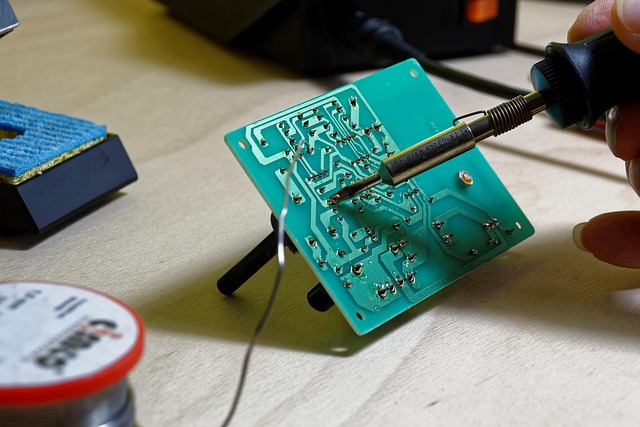
The Importance of Surface Finishes in PCB Manufacturing
Surface finishes protect exposed copper from oxidation and maintain solderability through multiple reflow cycles. They also influence contact resistance, heat dissipation, and joint mechanical strength. For QFNs, which rely on bottom-side pads rather than leads, the uniformity of the finish directly affects wetting behavior during soldering. A poor finish can cause voids or incomplete joints that compromise reliability under vibration or temperature cycling.
Common Surface Finishes Used in Modern PCB Design
ENIG (Electroless Nickel Immersion Gold), HASL (Hot Air Solder Leveling), and immersion tin dominate current PCB production lines. ENIG offers excellent corrosion resistance but comes at higher cost and complexity. HASL is economical but less suitable for fine-pitch components due to uneven surfaces. Immersion tin strikes a balance—flatness comparable to ENIG with simpler chemistry and strong solderability for lead-free processes. The choice depends on cost targets, environmental exposure, and assembly precision requirements.
Technical Characteristics of Immersion Tin in PCB Fabrication
Immersion tin’s appeal lies in its chemistry and predictable surface behavior. It forms a pure tin layer that bonds tightly to copper without introducing nickel barriers or gold contamination—ideal for low-resistance connections.
Chemical Composition and Deposition Process
The coating forms through a chemical displacement reaction where copper atoms are replaced by tin ions from solution. Typical thickness ranges between 0.8 and 1.2 µm to balance oxidation control with good solder wetting. Tight bath control prevents excessive intermetallic compound formation both during storage and after reflow soldering, maintaining consistent performance even after extended handling.
Advantages of Immersion Tin for Fine-Pitch Applications
Its planar surface makes it particularly suitable for QFN and BGA packages where pad coplanarity is critical. During reflow, molten solder spreads evenly across the tin layer, reducing bridging risk between adjacent pads. Immersion tin is fully compatible with lead-free solders such as SAC305 while maintaining low contact resistance—important for high-frequency or high-current circuits used in automotive ECUs or telecom modules.
Evaluating the Impact of Immersion Tin on QFN Package Reliability
Reliability testing often focuses on how finishes behave under repeated heating and cooling cycles or prolonged humidity exposure. For immersion tin, both intermetallic control and corrosion management play decisive roles.
Solder Joint Integrity Under Thermal Cycling
Tin-copper intermetallics naturally grow during thermal cycling; however, excessive thickness weakens joints by creating brittle layers. Controlled reflow profiles—typically with peak temperatures near 245 °C—limit this growth while ensuring full wetting. Comparative studies indicate that immersion tin joints exhibit better fatigue life than HASL when subjected to 1000-cycle −40 °C to +125 °C testing conditions common in automotive validation.
Corrosion Resistance and Shelf Life Considerations
Tin whiskers remain an inherent concern if plating stress is not relieved properly. Manufacturers mitigate this risk by optimizing bath additives and post-treatment annealing steps. Storage conditions also matter: relative humidity below 50 % and sealed nitrogen packaging extend usability before assembly by several months. Such practices minimize oxidation that could otherwise hinder solderability.
Integrating Immersion Tin into Modern PCB Design Workflows
Integrating immersion tin into design workflows requires collaboration between CAD modeling tools like SOLIDWORKS and precision fabrication equipment such as CNC machines to maintain dimensional accuracy at every stage.
Design Validation Using SOLIDWORKS and CNC Machining Integration
SOLIDWORKS simulations can model thermal expansion around QFN pads after reflow to predict mechanical stress distribution. When combined with CNC-machined tooling plates maintaining ±5 µm planarity tolerance, designers can verify that immersion tin-coated pads remain level across the board surface. This digital validation links mechanical design intent with manufacturability standards required for IPC Class 3 boards used in aerospace or medical devices.
Process Optimization for High-Reliability Boards
Close coordination between design engineers and fabricators ensures plating uniformity across panelized boards. Statistical Process Control (SPC) techniques track bath chemistry variations to maintain consistent coating thickness within ±0.1 µm tolerance bands. Post-plating inspection using X-ray imaging or microsection analysis confirms adhesion quality—critical before committing boards to expensive component placement lines.
Future Perspectives on Immersion Tin in Advanced Electronics Manufacturing
As electronic assemblies move toward miniaturization and environmental compliance, surface finish technologies evolve alongside automation trends.
Emerging Trends in Surface Finish Technology
Hybrid coatings combining immersion tin with organic protective layers are being tested to reduce whisker formation further while improving corrosion stability under damp heat conditions (85 °C/85 % RH). Automated plating lines equipped with inline sensors now monitor pH, temperature, and metal ion concentration continuously to improve repeatability—reducing scrap rates in high-volume production environments.
Sustainability and Environmental Compliance Factors
Immersion tin aligns naturally with RoHS directives since it eliminates lead-based materials entirely. Advances in wastewater treatment have reduced the environmental load of stannous sulfate baths by recovering dissolved metals through closed-loop filtration systems—a growing requirement under ISO 14001 environmental management frameworks adopted by global PCB manufacturers.
Practical Recommendations for Engineers Selecting Immersion Tin Finishes
Selecting immersion tin should follow a structured evaluation process that considers both material compatibility and operational demands rather than relying solely on cost comparisons.
Key Parameters to Evaluate Before Implementation
Engineers should confirm compatibility with component metallization types such as NiPdAu terminations commonly found on QFNs or micro-BGAs. The expected operating environment—temperature fluctuations, humidity cycles, mechanical vibration—should guide whether additional protective coatings are needed after assembly.
Best Practices During Fabrication and Assembly Stages
Boards should be handled minimally after plating; fingerprints accelerate oxidation even before storage packaging is applied. Using nitrogen atmospheres during reflow improves wetting consistency across all joints while reducing dross formation inside ovens—a small change that often translates into measurable yield improvement over large production volumes.
FAQ
Q1: What makes immersion tin suitable for QFN applications?
A: Its flat surface provides excellent coplanarity for bottom-terminated components like QFNs, allowing uniform solder flow without bridging issues common with uneven finishes such as HASL.
Q2: How long can immersion tin boards be stored before assembly?
A: When sealed under dry nitrogen below 50 % humidity, they typically maintain full solderability for up to six months depending on storage temperature stability.
Q3: Does immersion tin cause whisker growth problems?
A: Whiskers can form if internal stress remains high; however, modern formulations include additives that relieve stress during deposition, significantly reducing occurrence rates.
Q4: Can immersion tin be used with leaded solders?
A: Yes, though it was designed primarily for lead-free applications; its pure-tin layer wets well with both SnPb and SAC alloys without adverse reactions when reflow profiles are properly managed.
Q5: How does SOLIDWORKS contribute to validating immersion tin designs?
A: Simulation tools within SOLIDWORKS allow engineers to visualize thermal expansion effects around plated pads post-reflow, ensuring mechanical stability aligns with CNC machining tolerances before mass production begins.