

What Makes CNC Mill Programming Essential in Edison’s Advanced Workshop
Edison Offering CNC Mill Programming Workshop
Edison’s CNC Mill Programming workshop stands as a strategic platform for advancing manufacturing expertise. It provides engineers and machinists with hands-on exposure to complex milling environments and the latest digital manufacturing tools. The program focuses on integrating G-code mastery, CAD/CAM workflows, and real-time simulation to achieve precision machining outcomes. By aligning technical training with industry demands, Edison’s initiative strengthens the bridge between design innovation and production efficiency in modern manufacturing systems.
The Strategic Role of CNC Mill Programming in Modern Manufacturing
CNC mill programming today defines how efficiently a factory can translate design intent into tangible products. It is no longer a support skill but a core competency shaping every stage of production.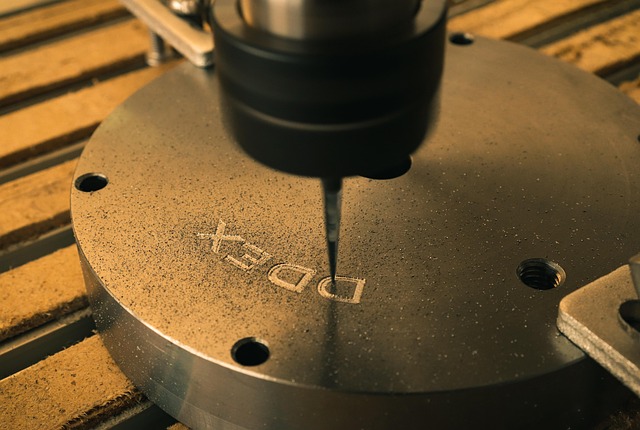
Understanding CNC Mill Programming as a Core Manufacturing Competency
CNC mill programming connects design precision with production flow. It translates digital models into machine commands that drive cutting tools across complex geometries. Through mastery of G-code and CAM integration, programmers deliver consistent quality across batches while maintaining tight tolerances. In advanced manufacturing, such control ensures repeatability even under variable material conditions.
Why Advanced Workshops Focus on CNC Programming Proficiency
Modern workshops prioritize programming skills because they directly influence cost efficiency and product quality. Skilled programmers analyze tool paths to minimize idle motion, reducing both cycle time and material waste. As multi-axis machines become standard, proficiency supports intricate part geometries without compromising dimensional accuracy. Continuous learning keeps professionals aligned with evolving software updates and machine controllers, ensuring compatibility with Industry 4.0 systems.
The Integration of CNC Mill Programming in Edison’s Advanced Workshop
Edison’s workshop demonstrates how applied technology transforms theoretical knowledge into industrial capability. Its structure merges academic rigor with practical machine operation, creating a realistic training ecosystem for engineers.
How Edison’s Workshop Aligns Technology with Practical Application
The workshop operates as a simulation-based environment where learners interact with real milling systems rather than isolated software exercises. Participants work on multi-axis setups that enhance spatial reasoning and process comprehension. The seamless link between CAD design and CAM execution allows trainees to visualize how tool paths affect surface integrity before actual machining begins.
Key Technological Infrastructure Supporting the Workshop
Edison equips its facility with high-speed machining centers that replicate industrial-scale operations. Digital twins are employed to predict machining outcomes and refine code accuracy before physical trials. Data-driven analysis tools monitor tool wear patterns and feed rate variations, helping participants interpret live performance data for better decision-making during production.
Enhancing Precision and Efficiency Through Advanced CNC Techniques
As manufacturing complexity rises, programming strategies must evolve from simple code writing to intelligent machining management. Edison’s curriculum emphasizes these advanced techniques as essential for high-performance production lines.
Optimization Strategies in Tool Path Programming
Adaptive algorithms adjust tool engagement automatically to maintain smooth cutting conditions across uneven surfaces. Dynamic feed rate control modifies spindle speed in real time based on load feedback, improving both finish quality and tool life. Before any operation begins, simulation-based validation identifies potential collisions or inefficiencies, saving costly rework later on the shop floor.
Multi-Axis Machining and Its Impact on Production Quality
Five-axis milling enables creation of intricate parts—such as turbine blades or orthopedic implants—with minimal repositioning. Enhanced kinematic control maintains dimensional accuracy even when axes move simultaneously through complex curves. By optimizing orientation strategies, operators reduce manual intervention between setups, achieving faster throughput without compromising consistency.
The Educational Framework Behind Edison’s CNC Mill Programming Training
The educational design at Edison reflects the balance between technical theory and operational realism. It prepares participants not only to operate machines but also to innovate within precision engineering contexts.
Curriculum Design Tailored for Industry Experts
Modules include advanced G-code customization for automated cycles, macro programming for repetitive processes, and integration of process automation principles. Hybrid learning blends classroom instruction with live machine sessions so learners experience immediate application of new concepts. Real-time feedback from instructors accelerates mastery by linking coding decisions directly to machining results observed on the floor.
Collaborative Learning Environment for Technical Innovation
Collaboration forms the backbone of Edison’s methodology. Peer-to-peer projects challenge participants to solve authentic production problems requiring joint analysis of geometry, tooling, and code logic. Mentorship from seasoned machinists grounds theoretical knowledge in practical wisdom gathered from years on industrial lines. Group assignments simulate full production chains—from design through inspection—reinforcing teamwork under realistic constraints.
The Future Outlook of CNC Mill Programming in Advanced Manufacturing Ecosystems
The next generation of manufacturing will depend heavily on digital integration across disciplines. Edison’s approach anticipates this shift by embedding adaptive thinking into its training model.
Emerging Trends Influencing the Evolution of CNC Programming Skills
AI-assisted coding is beginning to predict optimal cutting parameters based on prior datasets, reducing manual trial-and-error phases. Cloud-based CAM platforms now allow distributed teams to collaborate remotely while maintaining version integrity across revisions. Intelligent pattern recognition further automates routine coding tasks, freeing programmers to focus on higher-level process refinement.
Preparing Professionals for Next-Generation Manufacturing Challenges
Ongoing upskilling aligns technicians with global standards like ISO 14649 (STEP-NC) that define data-driven machining communication protocols recognized by IEC committees worldwide. Cross-disciplinary fluency—combining mechanical design insight with robotics control and analytics—becomes essential for leadership roles in smart factories. Edison’s model exemplifies how adaptive education can sustain competitiveness within rapidly digitizing manufacturing ecosystems.
FAQ
Q1: What is the main goal of Edison’s CNC Mill Programming workshop?
A: It aims to build professional competence in translating CAD designs into precise machining operations using modern multi-axis systems.
Q2: Who can benefit most from this training?
A: Experienced machinists, mechanical engineers, and manufacturing specialists seeking deeper command over digital production tools gain the most value.
Q3: How does simulation improve learning outcomes?
A: Simulation allows error detection before metal cutting begins, reducing material waste while helping learners visualize real machine behavior safely.
Q4: What technologies support predictive accuracy at Edison’s lab?
A: Digital twins combined with data analytics enable predictive modeling of tool wear and feed rate response during simulated operations.
Q5: How does this program prepare participants for Industry 4.0?
A: By integrating AI-assisted programming concepts and cloud-based collaboration frameworks aligned with international smart manufacturing standards like ISO 14649.